If you’ve seen the headlines, you may be asking a fair question: if ChatGPT can solve maths problems that defeated expert mathematicians for decades, why should my child spend years learning maths?
I’m John Onayemi, and I’ve spent over ten years teaching Mathematics and the sciences one-to-one. Parents of my students, from KS2 to IGCSE, GCSE, A-Level, SAT and AP, are asking me this more and more. My answer is yes, your child should still learn maths, and the reasons matter more now than before.
What actually happened?
The headlines are about a set of puzzles called Erdős problems, named after the Hungarian mathematician Paul Erdős, who left hundreds of open questions behind when he died in 1996.
- January 2026: An OpenAI model, GPT-5.2 Pro, produced a proof for Erdős Problem #397. A computer verification tool checked it, and Fields Medal-winning mathematician Terence Tao accepted it. He pointed out that such problems are often the more approachable ones, solvable with standard techniques.
- April 2026: An amateur entered a 60-year-old problem (#1196) into GPT-5.4 Pro and reportedly received a working solution in under two hours.
- May 2026: OpenAI announced that one of its models had disproved the Erdős unit distance conjecture, an 80-year-old geometry problem from 1946. Google DeepMind reported that its AlphaProof Nexus system had solved nine other open problems.
These are real achievements, and AI is clearly becoming a serious research tool.
A reality check on the hype
Not every claim has held up. In October 2025, an OpenAI executive said GPT-5 had solved ten unsolved Erdős problems. The mathematician who runs the Erdős Problems website corrected this: the problems were listed as “open” only because he personally didn’t know of existing solutions, and the AI had found published papers he hadn’t seen.
The lesson is that AI is powerful but still needs people to check its work, decide which problems matter and understand what a result means. Those people need a strong maths education.
So, should your child still learn maths?
Yes. Here are five reasons.
1. AI needs humans who can tell right from wrong
AI tools can be confidently wrong. They make sign errors, skip steps and misread questions. A student who understands the subject can spot when an answer looks off. A student who only copies answers cannot.
2. Exams reward method, not just answers
In GCSE, IGCSE, SAT, AP and most K-12 courses, marks come from working and clear reasoning, not only the final answer. Exams are also sat without AI. A student who has outsourced their thinking will find this out at the worst moment.
3. Maths trains the mind, not just the calculator
Maths builds logical thinking, patience and the ability to break a hard problem into smaller steps. These skills help in science, engineering, medicine, finance and computing, and they will matter more in a world full of AI.
4. Understanding beats answer-getting
Two students can reach the same correct answer. One knows a procedure, and the other knows why it works. The second can handle an unfamiliar exam question. That is why my lessons focus on understanding first.
5. Confidence comes from doing
Many students who struggle with maths have lost confidence, not ability. Confidence is built by working through hard problems, making mistakes and fixing them. No tool can do that for a child.
How to use ChatGPT well for maths
AI isn’t the enemy. Used properly, it can be a helpful study partner. These are the rules I give my students:
- Try the question first. Struggle a little before asking for help.
- Ask “why”, not just “what”. Have the AI explain each step in plain language.
- Check its work. Treat every answer as something to verify.
- Ask for similar practice questions and attempt them alone.
- Never copy a solution you couldn’t reproduce in an exam.
How my lessons build skills AI can’t replace
Every lesson follows four steps: Understand, Practise, Apply the principles, and Progress. I start with an assessment to find your child’s strengths and gaps, then build a personalised learning plan around their level, curriculum and goals. The aim is conceptual understanding, problem-solving, critical thinking, independent learning and exam confidence.
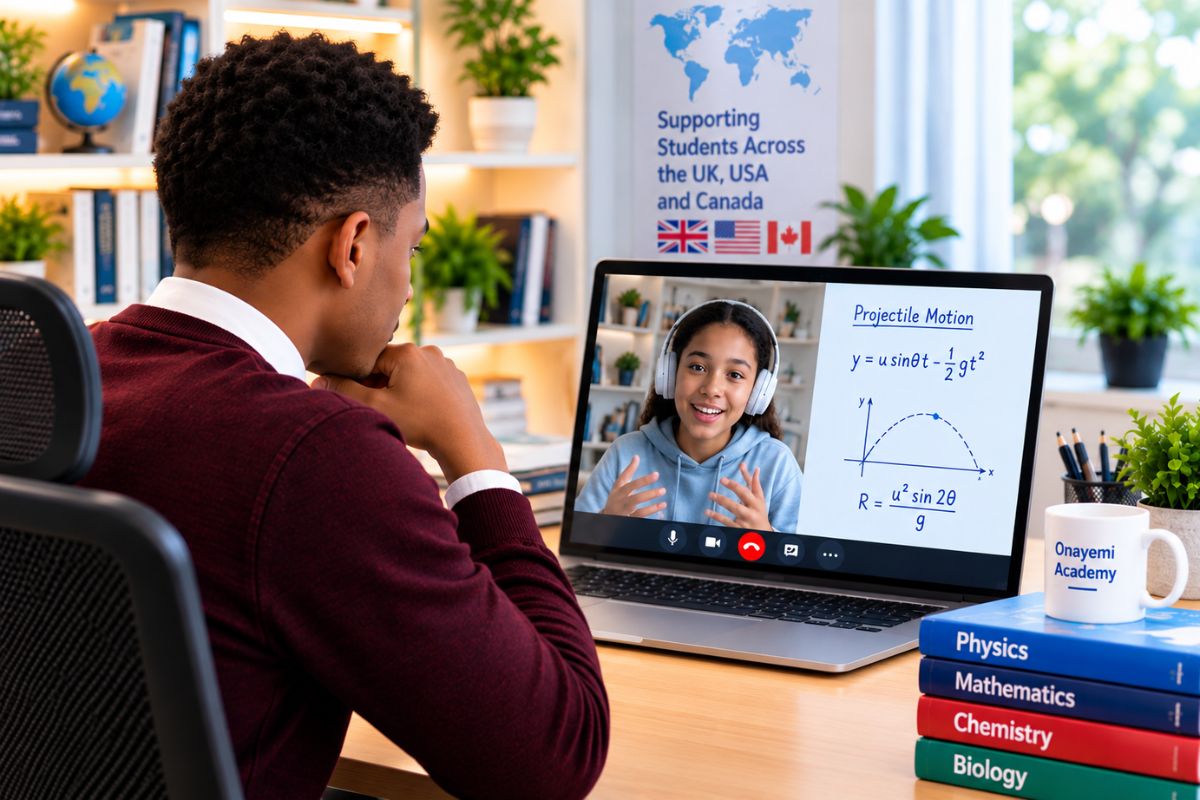
I support students across UK, US and Canadian curricula, with subjects including Mathematics, Further Mathematics, Physics, Chemistry and Biology. You can read more about how I teach or about me.
Frequently asked questions
Can ChatGPT really solve unsolved maths problems?
It has helped solve some problems listed as open, including a major geometry conjecture in 2026. Experts checked these results, and some earlier claims were overstated.
Who was Paul Erdős?
A Hungarian mathematician (1913 to 1996) who published an extraordinary number of papers and posed hundreds of unsolved problems that mathematicians still work on today.
Can my child use AI for maths homework?
Yes, as a tutor-style helper and not an answer machine. The key is attempting the work first and understanding every step.
Will AI replace maths tutors?
AI is a useful tool, but it can’t notice a child’s frustration, find a hidden misunderstanding or build confidence the way a person can.
Final thoughts
AI solving research-level problems is a reason to be curious about maths, not to give it up. The people who understand the subject deeply will get the most from these new tools.
If your child is preparing for 11+, 13+, GCSE, IGCSE, SAT, AP or A-Level, I’d love to help. Book a free trial or message me on WhatsApp.